The venerable katana remains a remarkable work of art, but consider if you desire to demonstrate your exclusive aesthetic? Altering your blade is a enriching journey, allowing you to forge a truly singular piece. From the tsuka wrapping and band to the handpiece design and marking, each feature offers a chance for personalization. This examination delves into the field of katana alterations, providing knowledge for both rookies and seasoned enthusiasts aiming to inscribe their impression on the time-honored art of the samurai.
Primary Authentic Workmanship
For starters motivated to embark on the exciting journey of eastern weapon training , 1060 steel katanas present an ideal entry point. This defined grade of basic steel reaches a perfect balance between expense and capability . While not reaching hard as supreme steels, 1060 allows for a manageable level of blade refinement , making it fitting for apprentices to enhance the preliminaries of sword maintenance and appreciate the elegance of traditional Japanese weaponry. It’s a great choice for gaining experience without the investment burden of more complex steels.
Type T10 Edges : Striking Capability and Economy
Supporting aficionados seeking an authentic blade experience without shattering the wallet , T10 alloy katanas represent a promising option. These weapons offer a considerable improvement in lastingness compared to basic alternatives, exhibiting respectable edge retention and enough flexibility for fundamental slicing techniques. While not rivaling the superior characteristics of fine steels like T100 or folded substance , T10 provides a distinguished blend of ability and affordability , making them a well-liked choice for trainees and those on a small financial .
Past the Metal: Adjusting Your Blade's Hardware and Hold
Though the refined edge is undeniably the important point of a katana, truly improving its aesthetic lies in the exact customization of its accessories and handle . This operation allows admirers to showcase their inimitable manner . Think about the comprehensive possibilities: menuki - decorative charms that introduce visual appeal ; the hamon sheaths – often masterfully engraved ; the tsuka center itself, wrapped in traditional ito cord ; and the fusa cap, which can be created from various materials like ornaments or horn .
- Elect themes that correspond with you.
- Experiment with multiple materials .
- Stress merit for a permanent result .
The Fascination of the Katana: Origins, Mastery, and Material
Each Japanese sword contains a matchless allure, steeped in ages of oriental history and ancestry. More than merely a tool of fighting , it's a sign of the samurai ethos – a fusion of mastery and governance . Its expansion spanned several generations, with early edges evolving into the sophisticated curvature and effective edge we recognize today. The creation involved is truly amazing , requiring spans of preparation to perfect . The process involves a involved folding of smelted iron , creating layers that fortify the instrument’s flexibility and slicing ability. Multiple schools of crafting appeared , each with their special secrets and formulas for achieving the ideal equilibrium and edge - a truly strenuous pursuit.
- Primary Katana varieties
- The part of the cutting armament in knight culture
- Conventional manufacturing procedures
Determining the Right Steel for Your Weapon Project: 1060 vs. T10
Identifying the fitting steel is crucially important for any oriental blade project, and the resolution between 1060 and T10 can be tough. 1060 is a regular American compound, offering a fair balance of toughness and hardiness, providing it fairly easy to heat treat. However, T10, a Japanese steel, commonly boasts amplified wear fortitude and can likely achieve a increased peak hardness, although it can be somewhat difficult to apply and requires thorough heat annealing. Consider your expertise and intended goals: for a inexperienced, 1060 may be a clearer entry, while the skilled smith might use the improved features of T10.
- Convenience of Working
- Endurance
- Definitive Durability
Revealing the Strength: Expert Katana Improvement Strategies
Perfecting the skill of sword tuning extends far beyond basic whetting. Serious experts are now exploring advanced techniques to truly discover a blade's hidden potential. This entails intricate work with the hamon, utilizing specialized ingredients for differential tempering and carefully opting for the form of the crossguard to optimize balance and capability. Beyond purely functional alterations, artisans are increasingly focused on generating unparalleled aesthetic grace, through complex decorating and layered surfaces that truly transform a katana into a exquisite object.
From Raw Steel to Masterpiece: Crafting a 1060 Katana
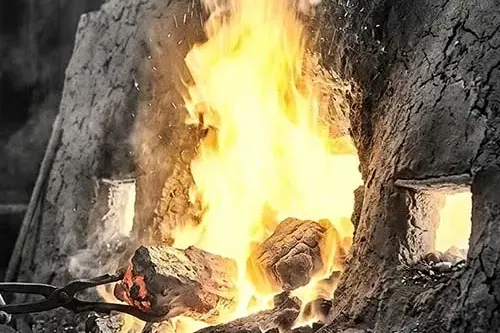
The journey opens with ordinary 1060 alloy , a robust material far removed the ornate katana it will evolve . Accomplished bladesmiths utilize a sophisticated process of folding and hammering the primitive steel, repeatedly raising it and pressing it to eliminate impurities and generate a stable grain structure. This painstaking process, often spanning for days , builds the essential hardness and flexibility characteristic of wakizashi a authentic Japanese cutlery . Follow-up heat methods , including deliberate hardening and resting, are vital to achieve the sought-after proportion of sharpness, stability and grace .- Combining: Diminishes impurities and establishes grain structure.
- Shaping: Designs the steel into the initial blade form.
- Curing: Regulates the final hardness and flexibility.
The Continuing Pull of the Katana: Comprehensive Review of Metalwork and Tailoring
Each established katana remains a striking symbol within Japanese tradition , its attraction far overtopping mere arms and armor . Forged from traditional steel and often featuring intricate designs , the method of creation itself is a revered art. Beyond the core craftsmanship, the ability to modify a katana - from the temper curve to the grip wrapping and band - opens for a perfectly individual manifestation for both devotees and handlers alike. This mixture of age-old steelwork and boundless personalization causes the katana's continued renown across the sphere .
