Commencing an complete survey on progressive apparatus interaction techniques.
Resilient silicone input panels supply a durable and modifiable fix for actuation surfaces across a large assortment of domains. The style typically involves manufacturing liquid silicone rubber into a specialized shape, enabling for exquisite geometries and built-in features. Key benefits include notable temperature durability, atmospheric resilience, and a comfortable texture under finger pressure. Implementations are numerous, from engine-powered controls and medicinal apparatus to engineering monitoring stations and even individual appliances. Their potential to withstand severe settings and convey dependable performance makes them a desired option for many creators.
Made-to-order membrane interfaces: Adapting interface structures for your equipment
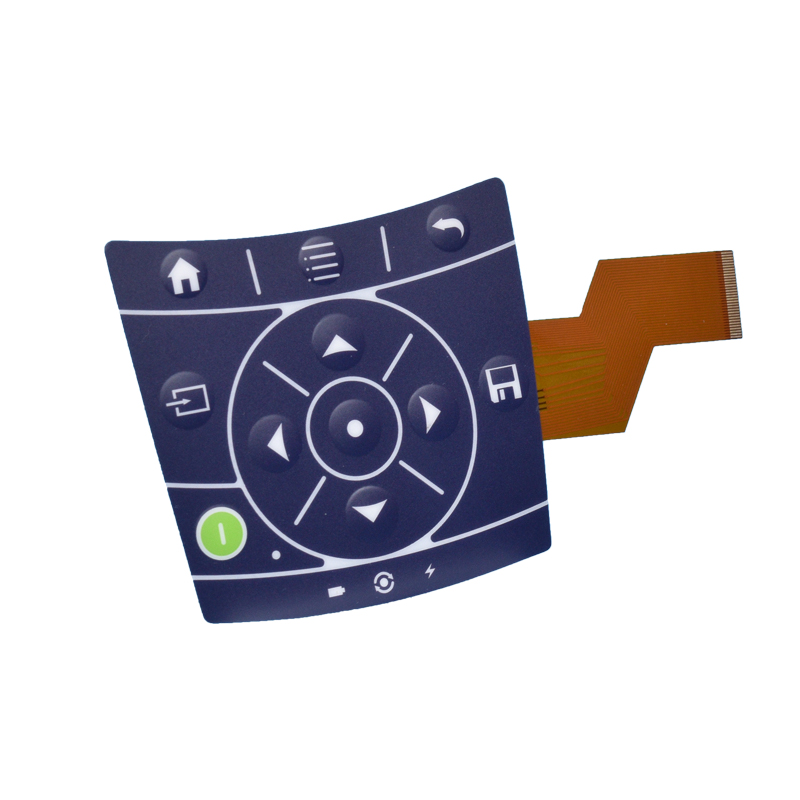
Create interface structures offer an bespoke resolution for improving the efficiency of tool's devices. Beyond conventional variants, custom keypad schemes empower customized operation of critical capabilities. Those customization encompasses tactile films, electroluminescence, and included assemblies, ensuring a user-friendly even long-lasting end-user encounter.
Protective laminates: Enhancing aesthetics and functionality in machinery development
Contemporary equipment creation increasingly utilizes graphic overlays to achieve a refined balance between style and effectiveness. These panels, often made with durable composites like polycarbonate or plexiglass, can function as both a protective layer and a information source. Such interfaces allow for the inclusion of intricate icons, designations, and even programmable elements. This process not only boosts the overall visual aesthetic of the device, but also considerably enhances its handling convenience.
- The interfaces can improve management.
- Visual covers minimize the risk of failures.
- Personalization choices are vast.
Flexible printed circuits: The driving force behind malleable electronics in instruments
Flexible layout substrates (FPC) are a necessary piece enabling the advancement of malleable instruments in state-of-the-art uses. Such varieties of delicate circuits afford enhanced productivity in comparison to traditional inflexible circuits, empowering engineers to fabricate new hardware like fitbits, biomedical sensors, and multi-functional monitors that compel tight volume considerations.Flexible rubber pads against membrane switch units: Choosing the right solution
Opting for best interface technology entails careful review of specialized use demands. Silicone resin keypads provide advanced contact, resilience, and natural defense – rendering them ideal for tough environments. In juxtaposition, membrane interfaces regularly represent a economical method, predominantly for high-volume creation sets. Even so, membrane pads can exhibit silicone rubber keypads suppliers from lessened response and finite time span, depending the grade of substances applied.
- Silicone: Greater tactile contact.
- Membrane: Affordable investment.
Custom Visual Films for Product Branding and Longevity
Elevate client's article's appeal and assure lasting protection with individually designed graphic overlays. These custom-made additions mainly enhance brand recognition but also provide a layer of durability against scratches. Consider incorporating custom imagery, icons and phrases to construct a compelling brand profile while upholding the organization's finish.
Adopting Malleable Printed Circuits: Compact Technologies for Optimal Output
Integrating flexible developed system (FPC) traces represents a vital development in modern hardware, supporting unmatched scaling and enhanced productivity. The following compact components confer a noteworthy gain in situations branching from lightweight technology to health apparatus. Besides, FPC model endorses for detailed links and packed channels, resulting in shrunk dimensions and refined communication quality. Ponder the prospect for advanced devices utilizing the specific properties of FPC platforms.
- FPC driving miniature electronics.
- Uses spanning multiple sectors.
- Design flexibility and signal integrity.
Hardy membrane controls: Securing tools in difficult settings
Engineered control panels and toggle buttons are critically important for safeguarding reliable operation of apparatus in adverse environments. Such modules frequently endure severe settings, trembling, wetness, and degrading substances, making toughness a essential aspect. Because of this, producers engineer actuation solutions using high-grade ingredients like long-lasting alloys and include shielded assemblies to withstand these tough conditions and retain efficiency.
Membrane panel and rubber tactile technologies: Thorough equipment control examination
Engineering robust and user-friendly equipment interfaces depends on careful consideration of various components; membrane switch and silicone rubber solutions consistently prove to be invaluable. Switch technologies offer durable, sealed options for control panels and displays, delivering reliable operation even in harsh environments. The configuration flexibility allows for custom graphics and intuitive functionality, uniting aesthetics with performance. Silicone rubber, meanwhile, presents exceptional advantages for rings, switches, and even complete covers. Its fundamental resistance to temperature extremes, chemicals, and UV degradation guarantees longevity and reduces maintenance requirements. A complete equipment interface strategy frequently implements both membrane switches and silicone rubber, solving needs ranging from simple on/off actions to complex multi-function operations. Considerations should include interaction feedback, shine options, and overall toughness for optimal user experience and equipment safety.
- Membrane switch types : Graphic
- Silicone rubber applications : Seals
- Design factors